
From periodic study to living model: the new logistics network digital twin
Traditional network-design studies begin with a major data-gathering exercise and produce a valuable—but temporary—view of the supply chain. A continuously connected digital twin turns that episodic analysis into an enduring tactical planning capability.
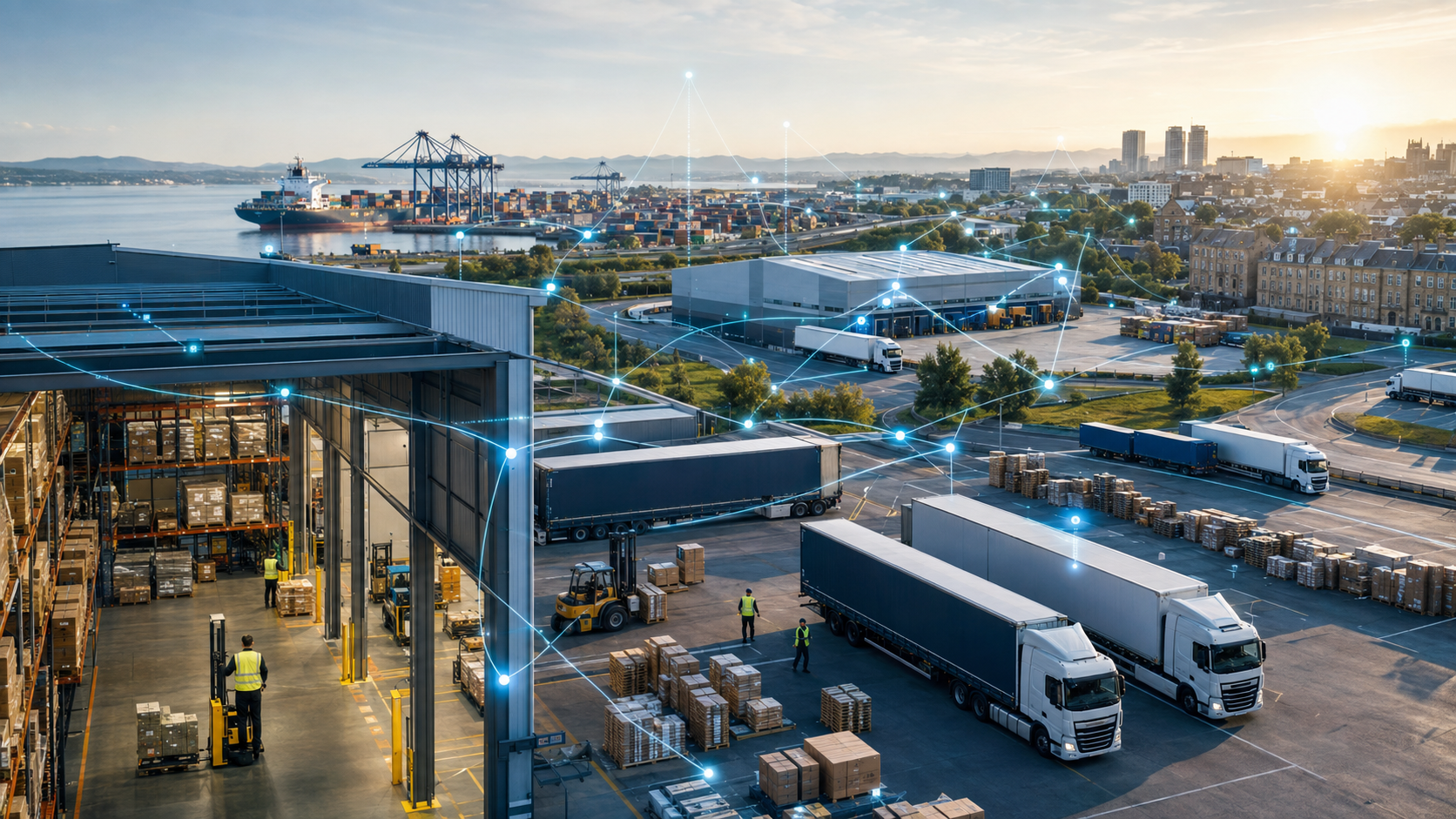
For decades, logistics network planning has followed a familiar pattern. A business reaches a major decision point, commissions a study and begins an intensive effort to assemble the necessary data. Analysts cleanse and reconcile information from multiple systems, construct a model of the network and test a defined set of strategic options.
The work can generate considerable value. But the model often captures the supply chain at one moment in time. As volumes, costs, inventory, service requirements and operating rules change, the gap between the model and reality grows. Reusing it months later may require another substantial data exercise—if it is reused at all.
A newer approach changes the starting point. Instead of treating data collection as the opening phase of each study, the network digital twin is continuously connected—or “plumbed in”—to the systems that run the supply chain.
That turns network modelling from a periodic project into a living planning capability.
Why traditional models become stale
A credible network model needs a broad and detailed evidence base. Depending on the operation, this can include demand and forecast flows, orders, inventory, product attributes, site capacities, transport lanes, lead times, handling rules, supplier constraints, service promises and costs.
These data rarely sit neatly in one system. They may use different product, location and time structures. Some values are recorded directly; others depend on business rules or carefully governed assumptions. As a result, building the data foundation can consume a large share of a traditional study.
Once the immediate strategic question has been answered, maintaining that foundation is difficult to justify. The model gradually ceases to reflect new customers, changed ranges, revised sourcing, altered delivery patterns or current operating performance.
The next question may therefore trigger the same extraction, cleansing and validation cycle all over again.
A digital twin begins with the data connection
The phrase “digital twin” is sometimes used simply to describe a detailed computer model. The more important characteristic is the relationship between model and operation.
A living logistics digital twin receives regular, governed updates from production supply-chain systems. Automated pipelines bring in the latest agreed data; validation controls identify missing or anomalous values; transformations translate operational records into a consistent network-planning structure; and snapshots preserve the position used for each scenario.
Not every feed needs to be real-time. For many tactical decisions, a controlled daily or weekly refresh is entirely appropriate. The objective is not maximum data velocity for its own sake. It is to ensure that the planning model remains current enough to be trusted and reused without rebuilding its foundations.
This persistent connection changes both the economics and the rhythm of network planning.
More scenarios, tested more often
When the baseline model is already available and up to date, the marginal effort required to investigate a new question falls dramatically.
Planners can examine not only occasional, high-stakes structural decisions but a much wider range of tactical scenarios, such as:
- reallocating flows when a distribution centre is constrained;
- testing revised inventory positioning by product category;
- responding to a port, supplier or transport disruption;
- comparing alternative cross-dock or replenishment rules;
- assessing seasonal peaks and changes in demand geography;
- exploring the service and cost effect of a new customer or range;
- evaluating temporary capacity or transport options.
Instead of waiting for a major study, teams can ask and answer smaller operational questions while there is still time to act.
Scenarios can also be refreshed as conditions evolve. A disruption plan developed on Monday can be rerun on Wednesday with current orders, stock and capacity. A seasonal strategy can be tested repeatedly as the forecast firms up. This closes the distance between modelling and management.
Separate the baseline from the scenario
A useful digital twin must make a clear distinction between what the network is doing and what the planner proposes to change.
The baseline should represent current locations, flows, capacities, costs, service rules and operating policies as faithfully as practical. It provides the reference case against which alternatives are measured.
Scenarios then apply controlled changes: a site constraint, different sourcing rule, altered service promise, new lane, revised capacity or alternative inventory policy. The resulting cost, service, flow and utilisation outcomes can be compared on a consistent basis.
This separation supports trust. Users can validate the baseline against known operational results, see exactly what differs in a scenario and understand why its outputs change. Assumptions and overrides remain explicit rather than disappearing into a one-off model build.
Current data does not mean uncontrolled data
Continuous connection brings its own design challenge. Production data are never perfect, and a planning tool should not silently accept every change.
Strong governance is therefore part of the twin: validation thresholds, exception handling, reconciliations, effective dates, versioned transformations and the ability to reproduce a previous run. Model inputs should be visible to planners, with clear ownership of both source data and planning assumptions.
Human judgement remains essential. The twin supplies a coherent and current representation of the network; it does not eliminate the need to interpret trade-offs, challenge constraints or decide which scenario is operationally acceptable.
From specialist project to operational capability
Large strategic studies will continue to have a role. Decisions about major capital investments, acquisitions or fundamental network restructuring demand deep analysis.
But a continuously maintained digital twin means those studies no longer have to start from zero. More importantly, it extends network-planning discipline into the tactical decisions made between major reviews.
The result is a model that earns its keep repeatedly: maintaining a shared baseline, accelerating scenario analysis and helping supply-chain teams respond to change with evidence rather than intuition alone.
The defining shift is simple but profound. The network model is no longer built for one question and then put aside. It becomes part of how the logistics operation understands itself and plans what to do next.
Transform 3D develops practical logistics network modelling capabilities that connect current operational data with repeatable scenario planning. If you want to move from periodic network studies towards a living planning model, contact us to discuss it.